Three roadmap formats that work in a deck
1. Quarterly roadmap (columns)
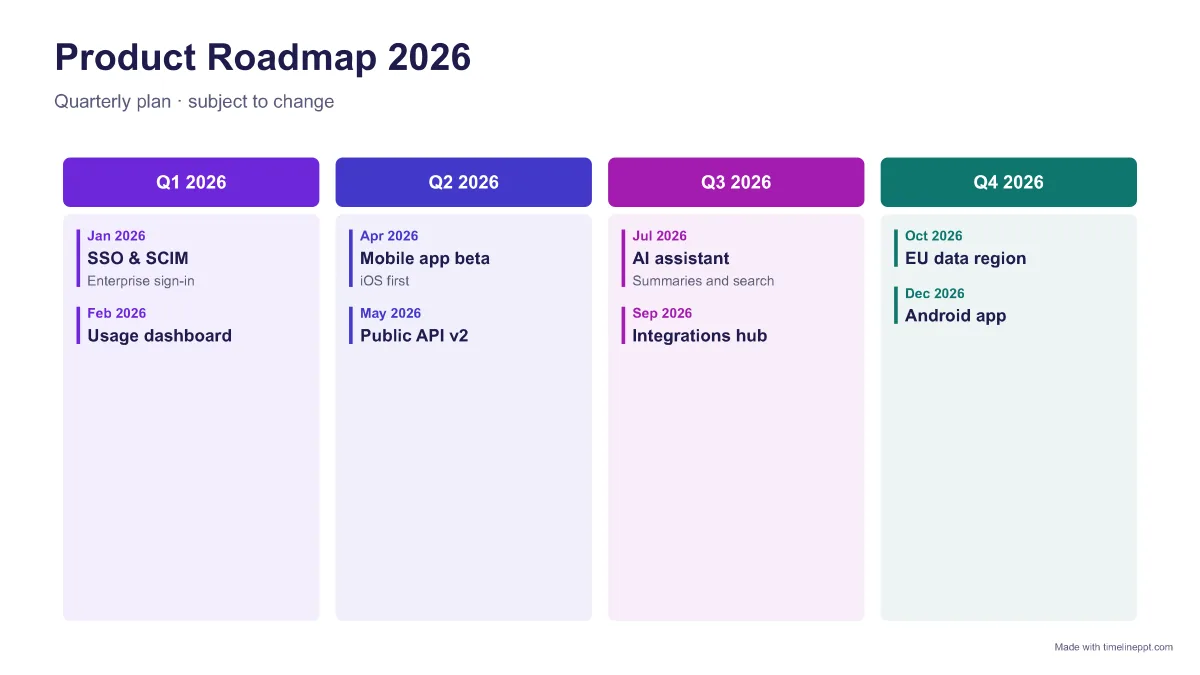
The format most leadership and board decks use: one column per quarter with the initiatives you plan to ship. Enter dates like “Feb 2026” and the maker groups them into quarters automatically, or type your own column names in the group field (e.g. “Phase 1”, “Phase 2”).
2. Timeline roadmap (arrow or line)
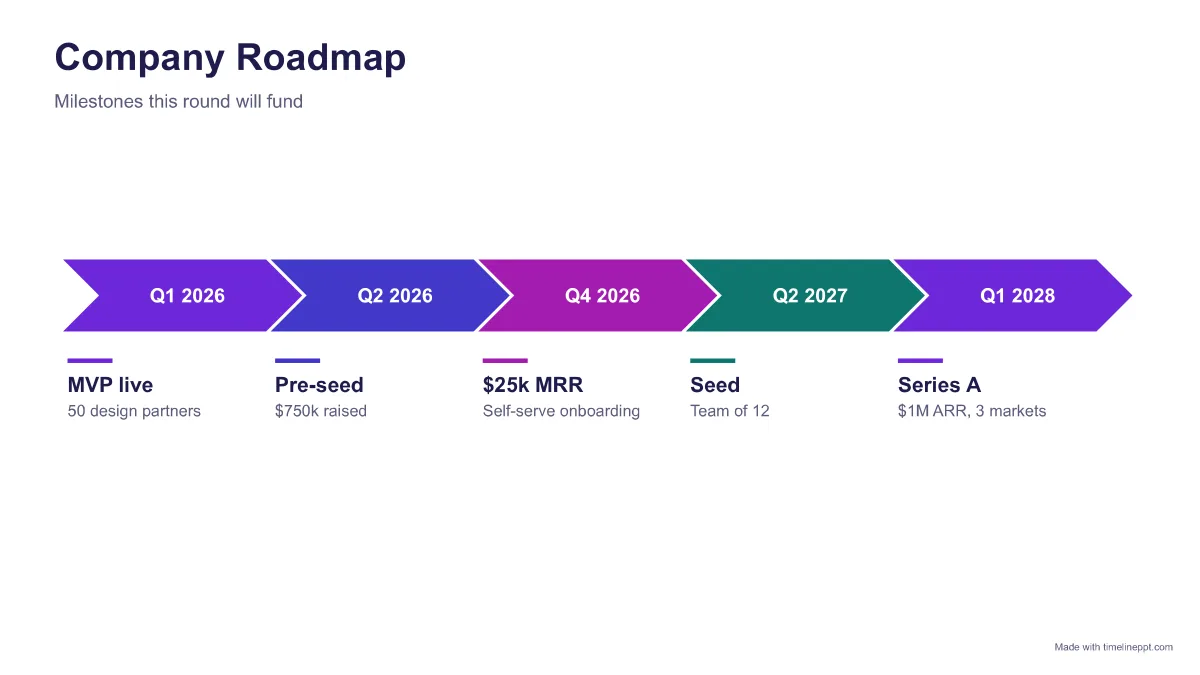
Best for startups and pitch decks: a short sequence of big milestones such as MVP, first revenue and funding rounds. Keep it to five or six steps so investors can read it in seconds.
3. Now / Next / Later roadmap (Pro)
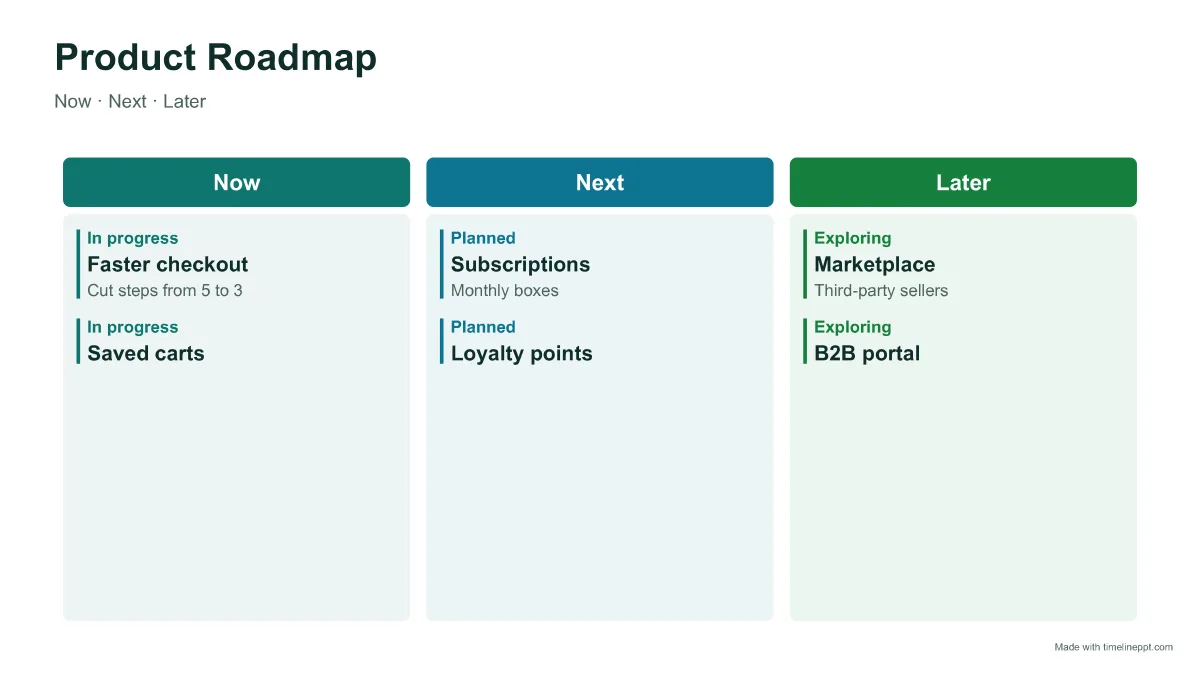
Popular with product teams because it shows priorities without committing to dates. Fill in the group field with Now, Next or Later and the slide sorts itself.
How to write roadmap items people understand
- Lead with the outcome: “Checkout in 3 steps” rather than “Refactor cart service”.
- Keep items to 2–5 words and add a short note only where it changes a decision.
- Show confidence. Add “subject to change” in the subtitle for anything beyond the next quarter.
- One colour per theme or team, not per item, so patterns stand out.
- Limit the slide to about 12 items. Put the full list in an appendix.
Roadmap vs. project timeline vs. Gantt chart
| Format | Answers | Audience |
|---|---|---|
| Roadmap | What are we building and why, roughly when? | Leadership, customers, investors |
| Project timeline | What are the phases and key dates? | Clients, sponsors, project teams |
| Gantt chart (Pro) | Who does what, from when to when, and what overlaps? | Project managers, delivery teams |
Not sure? Start with the full template library. Every roadmap template here is an editable timeline PPT template, so you can switch styles later without retyping.